Experience the difference. Test a microprocessor knee.
A microprocessor knee trial fitting gives you the opportunity to experience how MPK technology can enhance your mobility, stability and confidence in everyday life.
A microprocessor knee trial fitting gives you the opportunity to experience how MPK technology can enhance your mobility, stability and confidence in everyday life.
What is an MPK trial fitting?
A microprocessor knee (MPK) trial is a guided test period supported by your Prosthetist and Physiotherapist. It allows users to try an MPK in clinic and at home in real life situations before making a final decision. During the trial, the knee is carefully aligned, configured and adjusted to suit your individual mobility needs, allowing you to assess how it performs during everyday activities.
Why trial a microprocessor knee?
Compare your current prosthesis with a microprocessor knee
Put it to the test on ramps, stairs, varied terrain and over longer distances
Evaluate comfort, energy expenditure, stability and stumble recovery in real-life situations
Work with your Prosthetist to determine whether an MPK is the right solution for you

Accessing a microprocessor knee through the NHS.
For some people, a MPK may be available through NHS funding. Since 2016, NHS England has approved funding for adults and children with lower limb amputation, or limb difference. The NHS Microprocessor Knee (MPK) Policy outlines the criteria used to assess eligibility for devices such as C-Leg and Kenevo. If you think a microprocessor knee could support your mobility, speak to your prosthetist about whether you may be eligible and whether an assessment or trial is appropriate.
Get the most from your microprocessor knee trial.
These videos explain what to expect during your MPK trial and highlight the key features and activities you can test with your Prosthetist and in the real world.
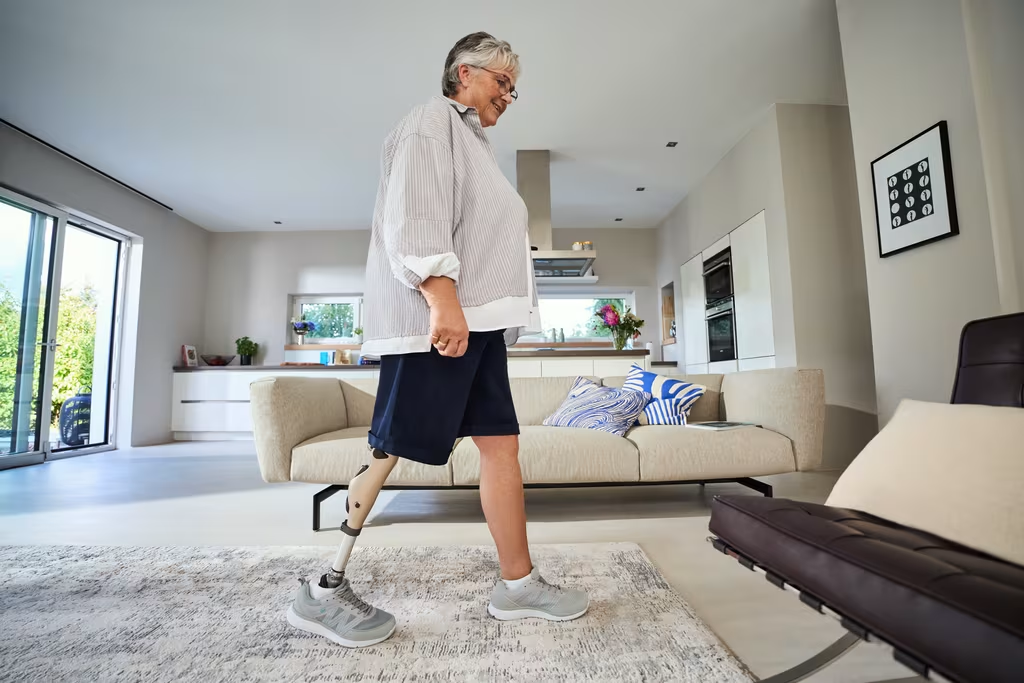
Choose the confidence of proven stability
Kenevo is designed to provide maximum safety and stability throughout every stage of rehabilitation and for people with lower mobility levels. This video shows you how to test the features that support balance, controlled movement and steady progress as your mobility improves.
Kenevo is designed to provide maximum safety and stability throughout every stage of rehabilitation and for people with lower mobility levels. This video shows you how to test the features that support balance, controlled movement and steady progress as your mobility improves.
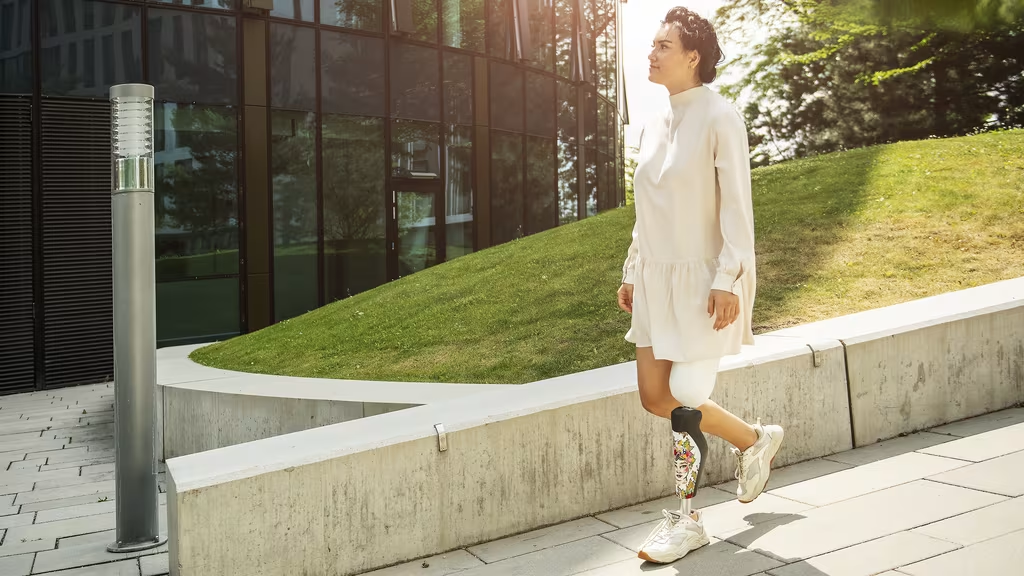
Choose the latest in proven performance
C-Leg is designed to provide reliable, stable support for everyday life. This video shows you which features to test during your trial fitting, so you can experience a smoother, more confident walking pattern on level ground, stairs and ramps.
C-Leg is designed to provide reliable, stable support for everyday life. This video shows you which features to test during your trial fitting, so you can experience a smoother, more confident walking pattern on level ground, stairs and ramps.

Choose effortless motion
Discover the key features of the Genium X4 and experience its smooth, natural movement. This video shows you what to expect during your trial, the activities to try, and how the technology supports an active lifestyle with exceptional performance.
Discover the key features of the Genium X4 and experience its smooth, natural movement. This video shows you what to expect during your trial, the activities to try, and how the technology supports an active lifestyle with exceptional performance.
What happens during a trial fitting?
Your Prosthetist checks your current setup and guides you through the trial fitting process.
A series of measurements, called 'outcome measures' are taken. These include measures related to functional mobility, participation and goal setting, and are first performed on your existing prosthetic limb (if applicable), when you collect the trial MPK and then again at the end of the trial.
The prosthesis will be individually set up and adjusted to suit your needs, with careful attention to alignment, posture, balance and comfort.
You will try everyday movements, including walking, turning, changing pace and standing comfortably. Once you feel confident, you can take the MPK home to experience how it supports you in your daily life.
You will then discuss your feedback and experience with your Prosthetist. If the trial is a success, the MPK will be prescribed for ongoing use.
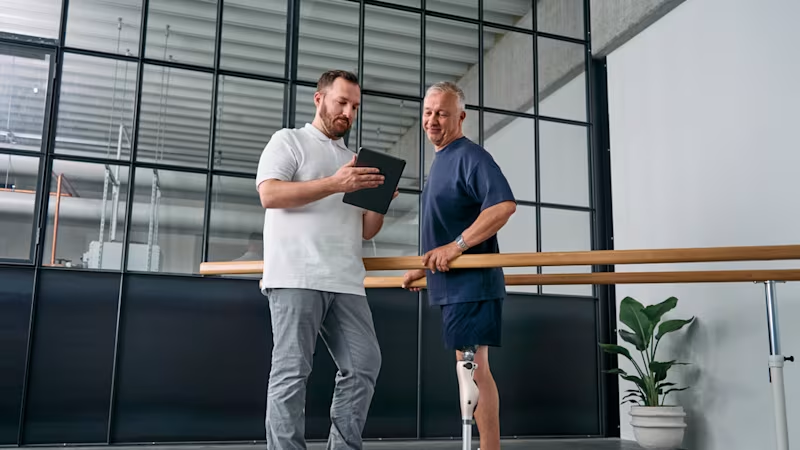
What should you test?
Recommended activities to try during your MPK trial.
Walking on level ground, longer distances and on slopes or ramps
Sitting down and standing up
Standing safely
Stairs (where clinically appropriate)
Turning and changing direction
Everyday activities relevant to your lifestyle

What should you observe?
Ask yourself following question during the trial:
Can I walk further?
Do I feel more stable and confident?
Do I have more energy after walking?
Do I experience any aches or pains?
Do I stumble or fall less often?
Does the knee support my daily activities?